In 1988, a collector came across a small orchid in the Rio del Corte valley in the Mexican state of Oaxaca. A total of seven plants, consisting of up to 120 individual growths, were found on an area of about one hectare at an altitude of around 320 meters above sea level. They were found on limestone rocks within a forest of pines, oaks and amber trees. A complete plant with several growths and parts of a second one were taken, both for scientific purposes and for breeding. All other privately owned plants originate from the complete plant.
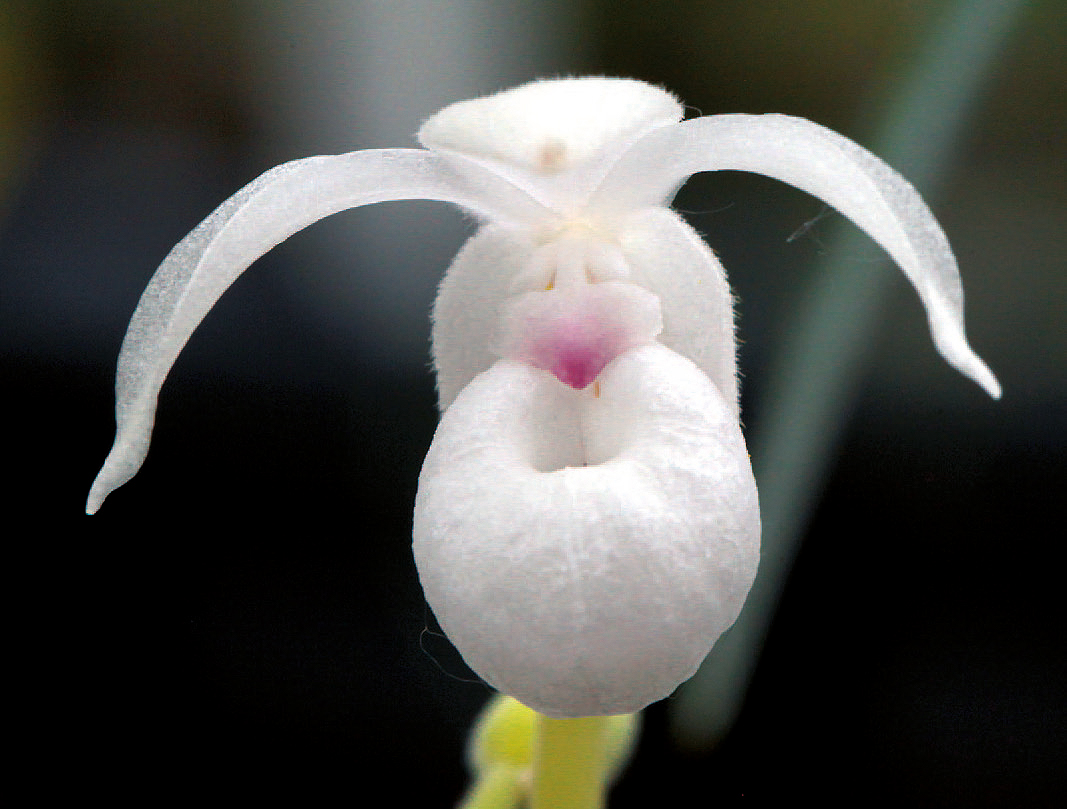
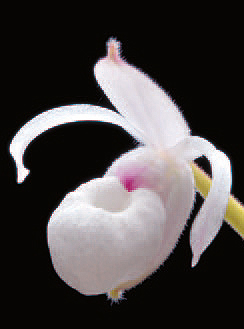
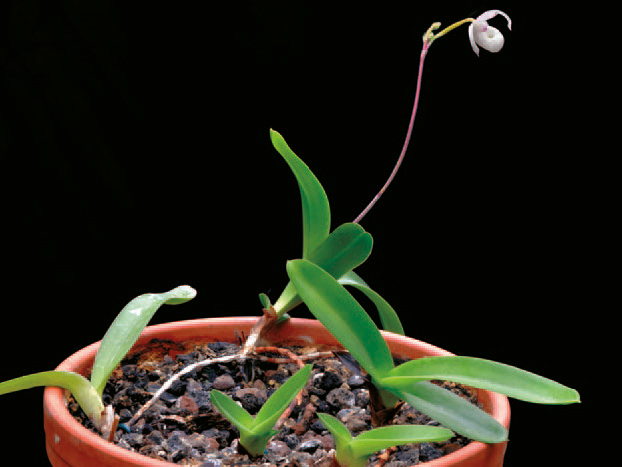
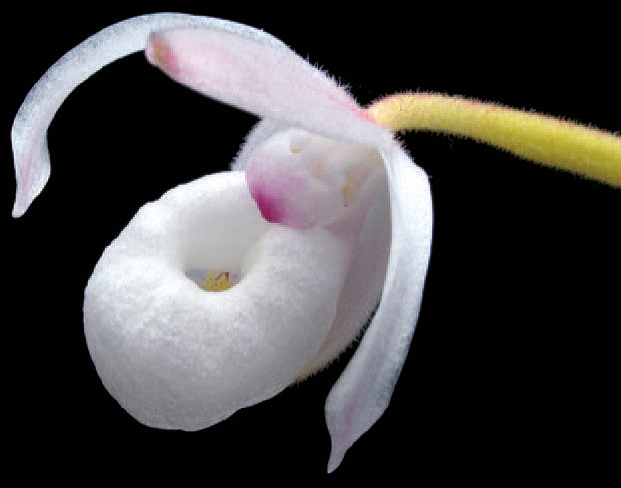
Mexipedium xerophyticum, photo: H. Hieronimus
Mexipedium xerophyticum
Declining numbers
In 1990, SOTO ARENAS, SALAZAR & HÁGSATER first described it as Phragmipedium xerophyticum. Although the exact location was not mentioned in the first description, collectors who went in search of the plant must have found it and removed more plants - illegally. As a result, in 1996 only two plants could be found and in 1998, after a fire had destroyed large parts of the forest, only one was left. Although this was badly damaged, it had recovered by 2009. Fortunately, however, in 2009 a few more plants were found on a two-hectare area near the first site. This is a ravine that is difficult to access. These plants also occur on limestone. Surprisingly, they are only found on the northern sides of the limestone cliffs. The plant is therefore not particularly light-hungry. At the new location it only grows on vertical walls.
This orchid, like the entire genus Phragmipedium, is listed in CITES Appendix I as Phragmipedium xerophyticum. For this reason, it is important to obtain the relevant documents (proof of purchase) when purchasing in order to be able to prove the origin in case of doubt.
Name history
As early as 1992, ALBERT & CHASE determined on the basis of chromosome studies that the differences to Phragmipedium were too great to remain in a common genus, and that it was more likely to occupy an intermediate position between this genus and Paphiopedilum. They therefore described the new genus Mexipedium. In 1994, V. A. ALBERT & Börge PETTERSON broadened the generic concept of Paphiopedilum and placed all Phragmipedium species and Mexipedium as synonyms in this genus. However, this classification never became accepted, which is why the current name Mexipedium xerophyticum (SOTO ARENAS, SALAZAR & HÁGSATER) V. A. ALBERT & M. W. CHASE, 1992). It is the only orchid directly related to Phragmipedium that grows on limestone.
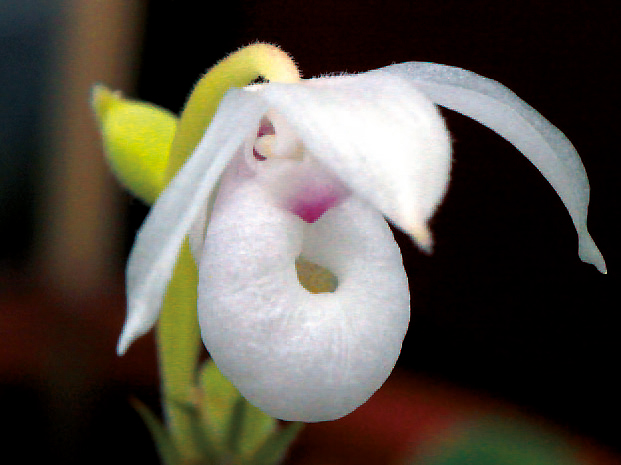
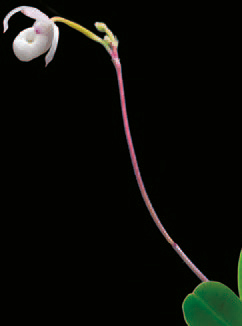
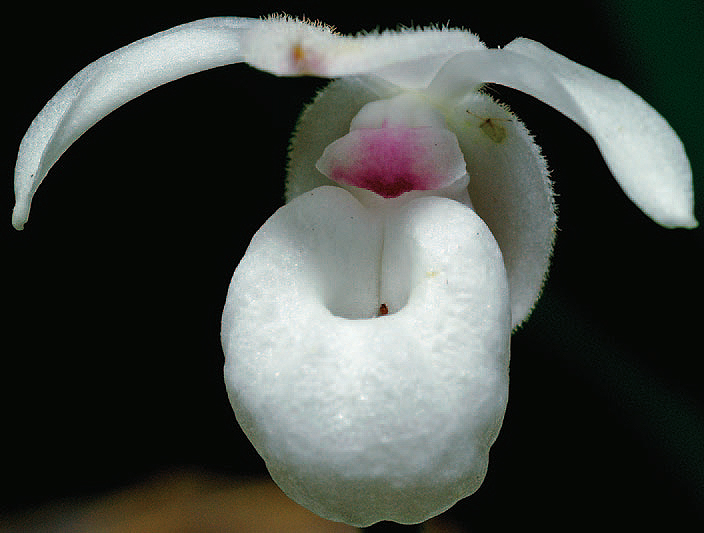
Mexipedium xerophyticum 2 photos: Dr. Hans Joachim Sandhagen
Description
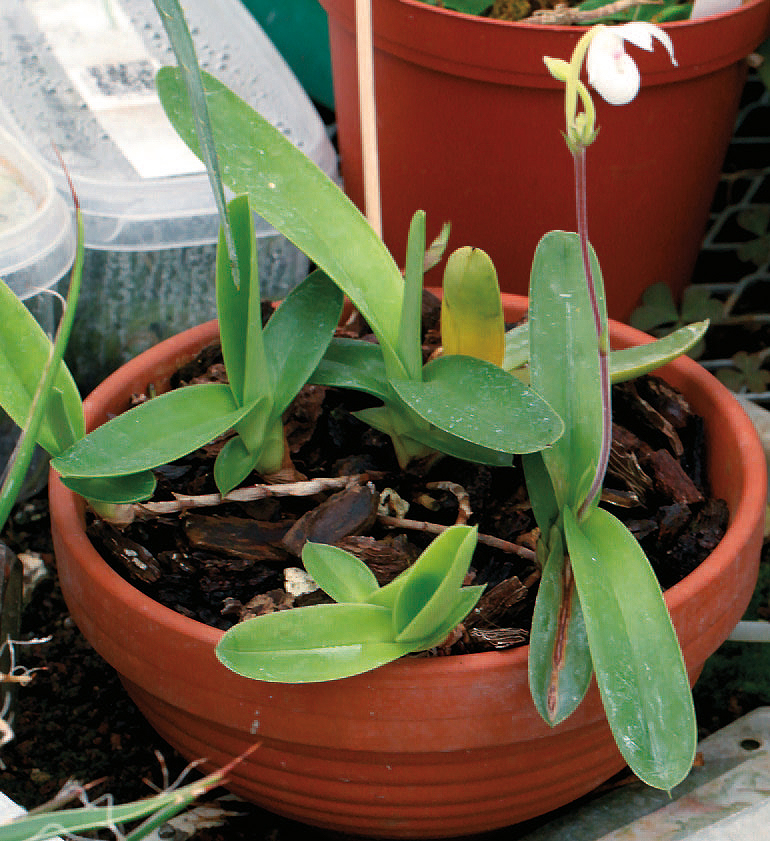
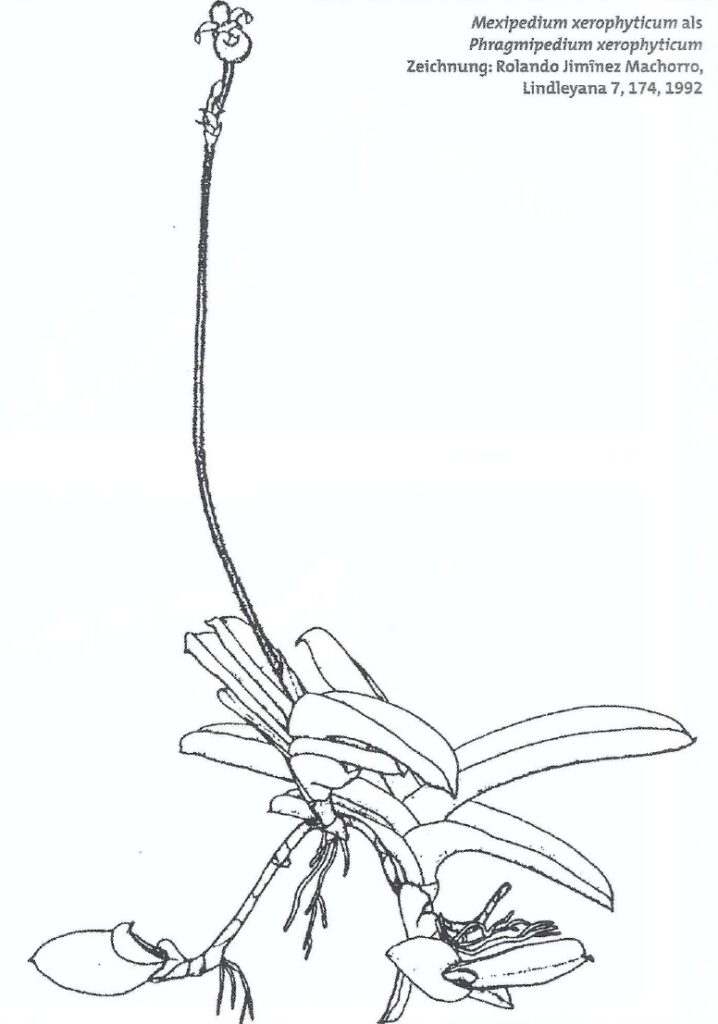
The epithet xerophyticum already indicates that it is a xerophytic, i.e. drought-tolerant plant. This is because from March to May is the dry season in its native habitat, with little or no rainfall. As an adaptation to this, the roots are hairy and covered by a perforated velamen radicum that is several cell layers thick. This not only prevents dehydration, but if water is available, it can also be absorbed very quickly. The rhizome between the shoots can have up to twelve internodes and be up to 20 cm long. However, the roots only emerge at the base of the shoots.
The conduplicate growth consists of five to eight leathery, obliquely upward-pointing leaves that are oblong-oval, up to 12 cm long and up to 2 cm wide. Only the leaf edge can be ciliate. The upper side of the leaf is rich green, the underside light green and about 1 mm thick.
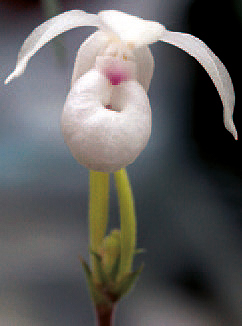
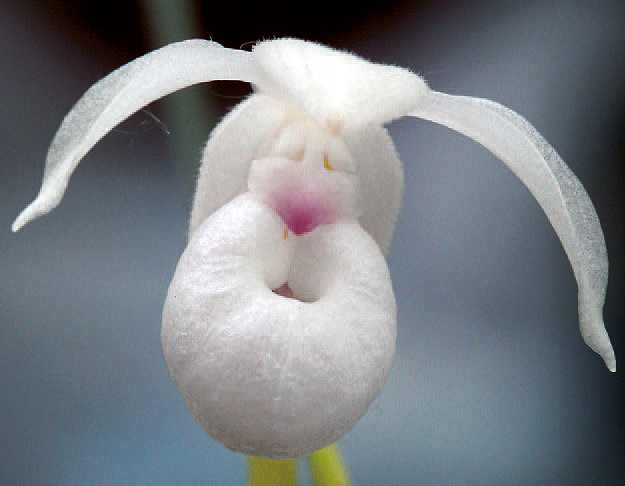
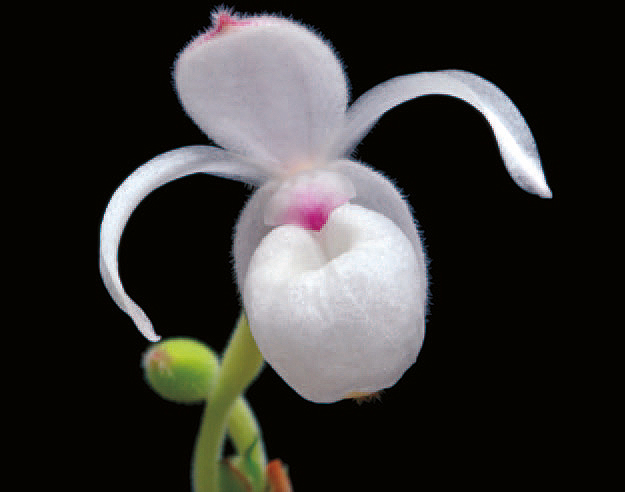
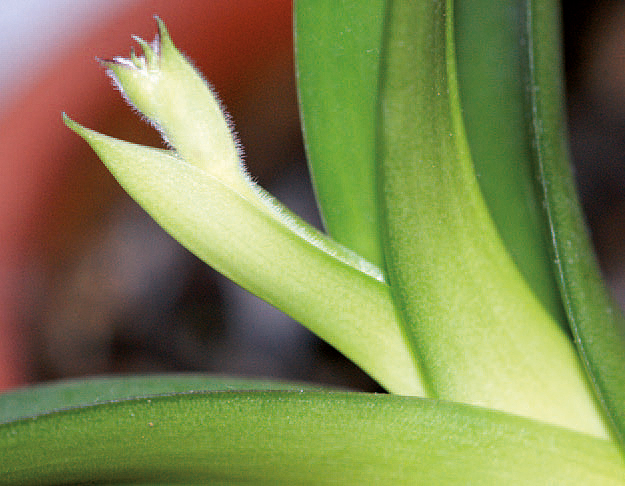
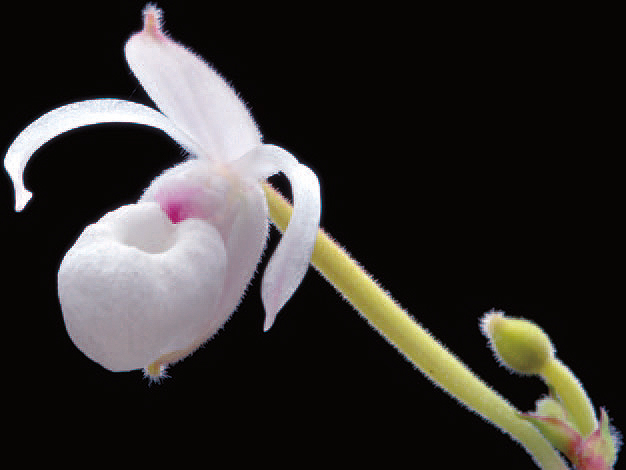
The inflorescence stem is reddish and grows up to 20 cm long. The bracts are hairy and ciliate along the edge, as is the unilocular ovary. A total of up to seven flowers can appear in succession. The petals are white with a few reddish spots. Description of the flower according to Wikipedia: ,,The upper sepal arches over the flower and ends in a point, it can also be hairy on the inside at the base and have cilia on the edge. The other two sepals are completely fused together (synsepal), only sometimes with a divided tip, but usually blunt-ended. The lateral petals are elongated, hairless except for a few cilia at the base, and end in a point. The lip is shaped like a pouch, the edges curved inwards. There are glandular hairs on the inside. The column bears two fertile stamens and one infertile stamen that has been transformed into a shield-shaped staminode. All three are short-stemmed. The stamens each contain the yellow, granular pollen in two chambers. The stigma is three-lobed. The numerous fruits develop in the cylindrical seed pod. In nature, the orchid is probably pollinated by insects, possibly bees. So far, however, it has hardly been propagated by seeds, but by dividing the shoots. Growth is generally slow."
Mexipedium xerophyticum
Mexipedium xerophyticum photo: Dr. Hans Joachim Sandhagen
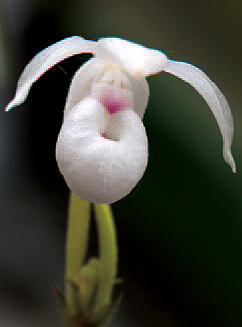
Mexipedium xerophyticum photo: Dr. Hans Joachim Sandhagen
Flowering time
In nature, the flowering period is in the fall. Many flowering orchids were found during the first discoveries, but no young plants or seedlings. In cultivation, however, these periods have not manifested themselves, and flowers are now also not uncommon in spring.
Culture
It is easy to cultivate, but requires patience as the plant grows slowly. Some lime (also in the form of small stones) should be added to the orchid substrate. Water and spray every two to three days, or more often on warm days. Waterlogging should of course be avoided. Normal tap water can be used for watering. More growths will soon form and can then be cut off.
Less light is needed during the winter and a little more in the summer. Several hours of direct sunlight are not necessary. In indoor cultivation, LED lighting with a high proportion of red and blue light can have a positive effect on growth. Flower formation may be induced by a slight dry phase, but this need not be as pronounced as in nature.
Conclusion
Today there are many more orchids of this species among orchid lovers than in the wild. The plant is also available from some orchid dealers in Germany. Given the rarity of the plant, the prices are not quite low, but are still affordable overall. And some enthusiasts have also obtained their plant by swapping.
Mexipedium xerophyticum 3 photos: Dr. Hans Joachim Sandhagen
Mexipedium xerophyticum
Mexipedium xerophyticum
Profile of Mexipedium xerophyticum
Subfamily: Cypripedioideae LINDLEY, 1826
Genus: Mexipedium V. A. ALBERT & M. W. CHASE, 1992
Species: Mexipedium xerophyticum (SOTO ARENAS, SALAZAR & HÁGSATER) V. A. ALBERT & M. W. CHASE, 1992
Synonyme: Phragmipedium xerophyticum and Paphiopedilum xerophyticum.
German name: none
Origin: Mexico, province of Oaxaca.
Size: The leaves can grow up to 12 cm long and the flower stems up to 20 cm. The flowers can be up to 2.5 cm in diameter.
Cultivation: Water and spray every two to three days, more frequently in summer, up to five times a day. Cultivate in a temperate area. Prefers bright locations, but not full sun all the time. In winter or spring, allow for a two-month dry period with very little watering.
Water: Tap water
Fertilization: After the dry phase, regularly add an orchid fertilizer in half concentration to the irrigation water.
Propagation: Allow runners to grow in new pots placed next to them, separate larger growths or by sowing.
Special features: The plant is very rare in the wild and threatened with extinction. That is why orchid lovers should build up good stocks.