
Sowing Mexipedium Seed
1. Introduction
Asymbiotic sowing is an artificial germination method for orchid seeds that does not rely on the natural symbiosis with mycorrhizal fungi. While orchid seeds have extremely low germination rates in nature, sterile culture on nutrient media enables controlled, successful germination.
This method is used by both professional laboratories and hobbyists to propagate rare or delicate species. Breeding Mexipedium xerophyticum is considered quite challenging and is practiced by only a very small number of breeders. It has also been reported that seed production alone is a challenge. We have not had this experience so far, although we regularly observe empty seed pods.
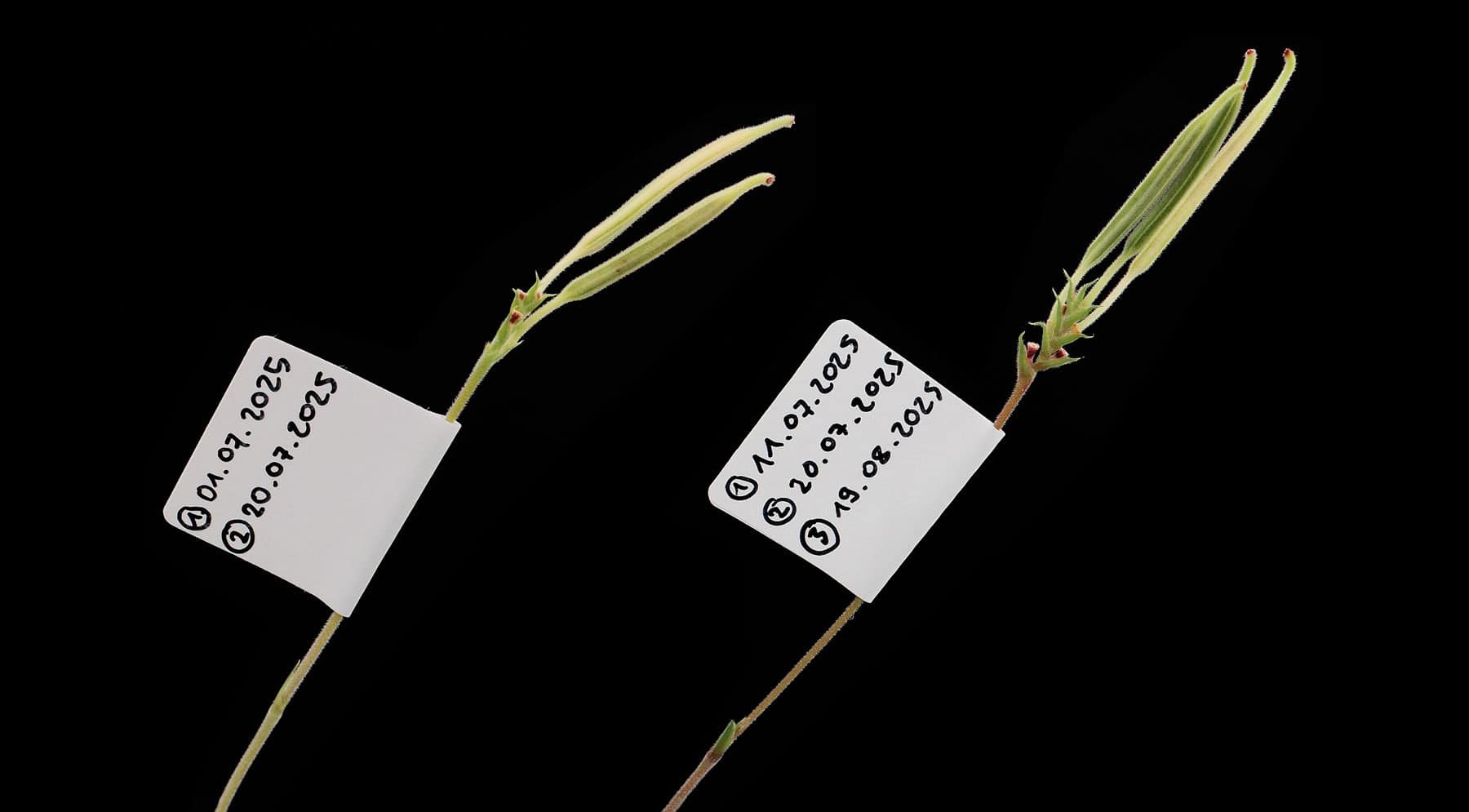
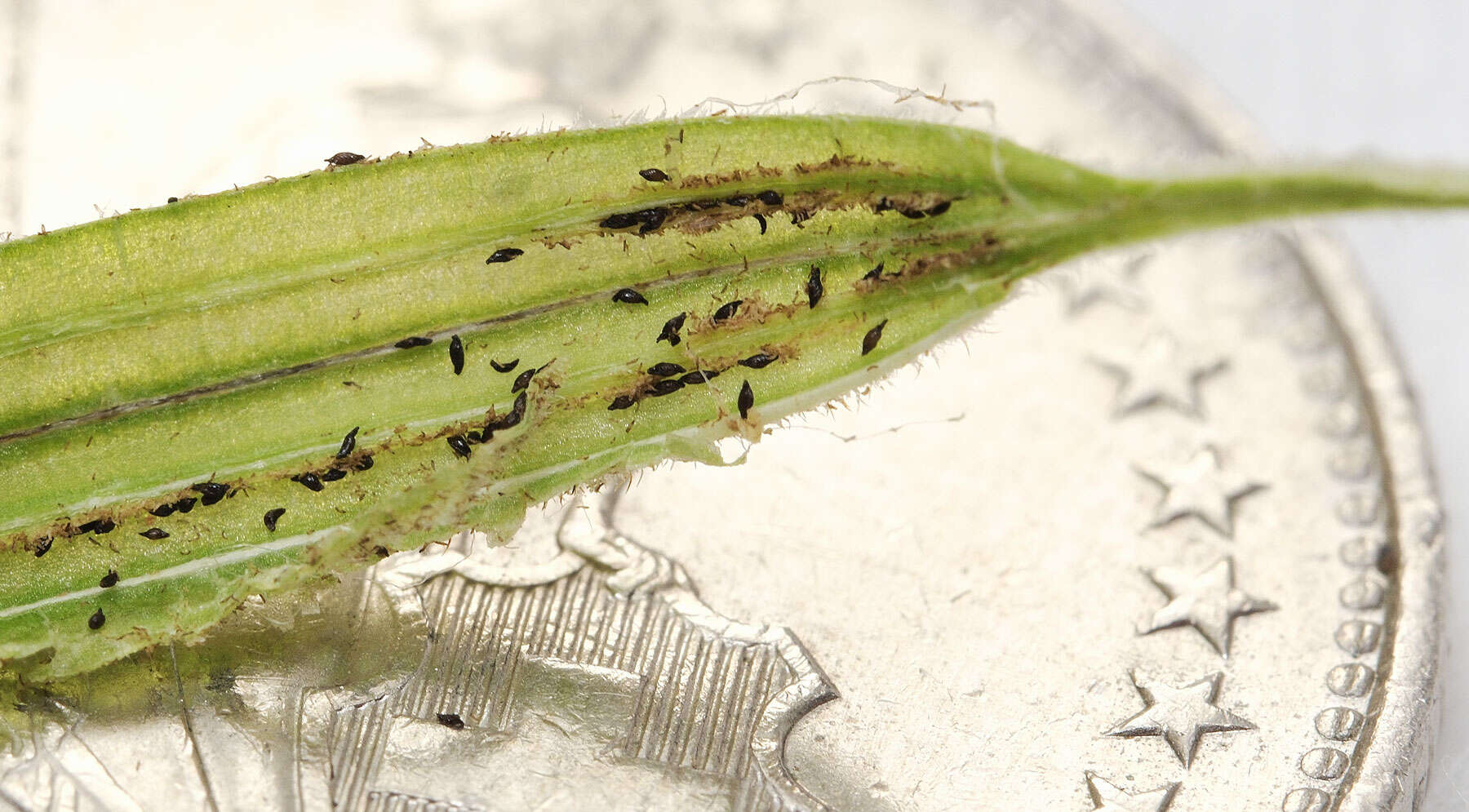
The process described here explains how to sow Mexipedium xerophyticum from a green, unopened seed pod. Whenever possible, this method is preferable to sowing seeds from a dry, opened pod.
2. Materials Needed
Before you begin, make sure you have all the materials ready.
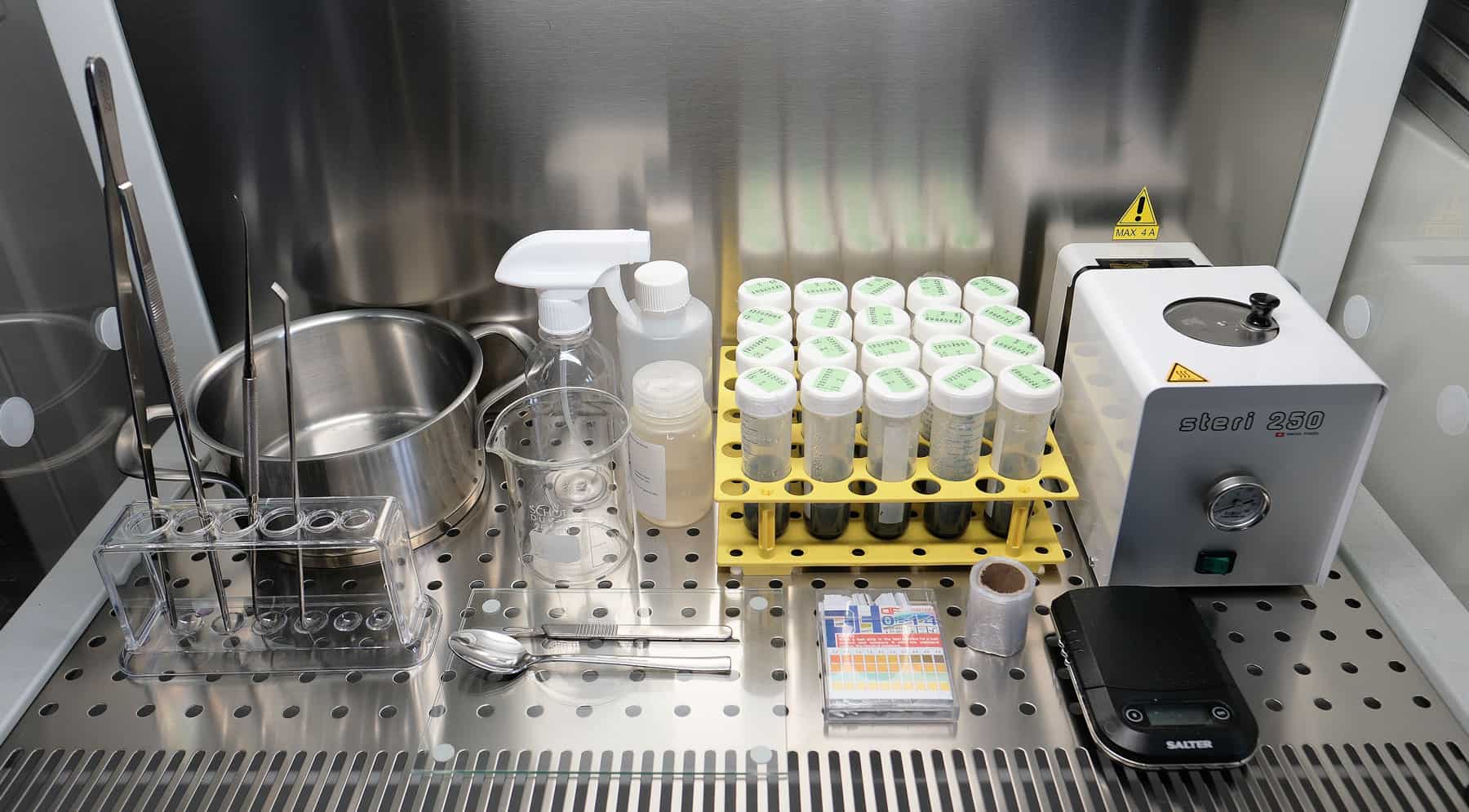
2.1. Equipment
- Laminar flow hood with a HEPA filter (alternatives are available for hobbyists)
- Autoclave or pressure cooker for sterilization
- Glass jars, screw-top containers, or culture bottles (e.g., baby food jars)
- Tweezers, scalpel, spoon, and spatula
- Spray bottle containing alcohol (70% ethanol or isopropanol)
- Precision scale
- pH meter or pH test strips (the former is definitely preferable)
- Measuring cup
- A pot and stove for preparing the culture medium
- Glass bead or infrared sterilizer
- Laboratory tool rack
- Roll of plastic film for sealing the culture containers
2.2. Chemicals
The following chemicals are needed during the sowing process:
- Disinfectant for surface sterilization of the seed pod (e.g., 10% household bleach with a drop of dish soap)
- 70% ethyl alcohol (ethanol) for surface disinfection
- NaOH (caustic soda) to raise the pH level
- HCl (hydrochloric acid) for lowering the pH
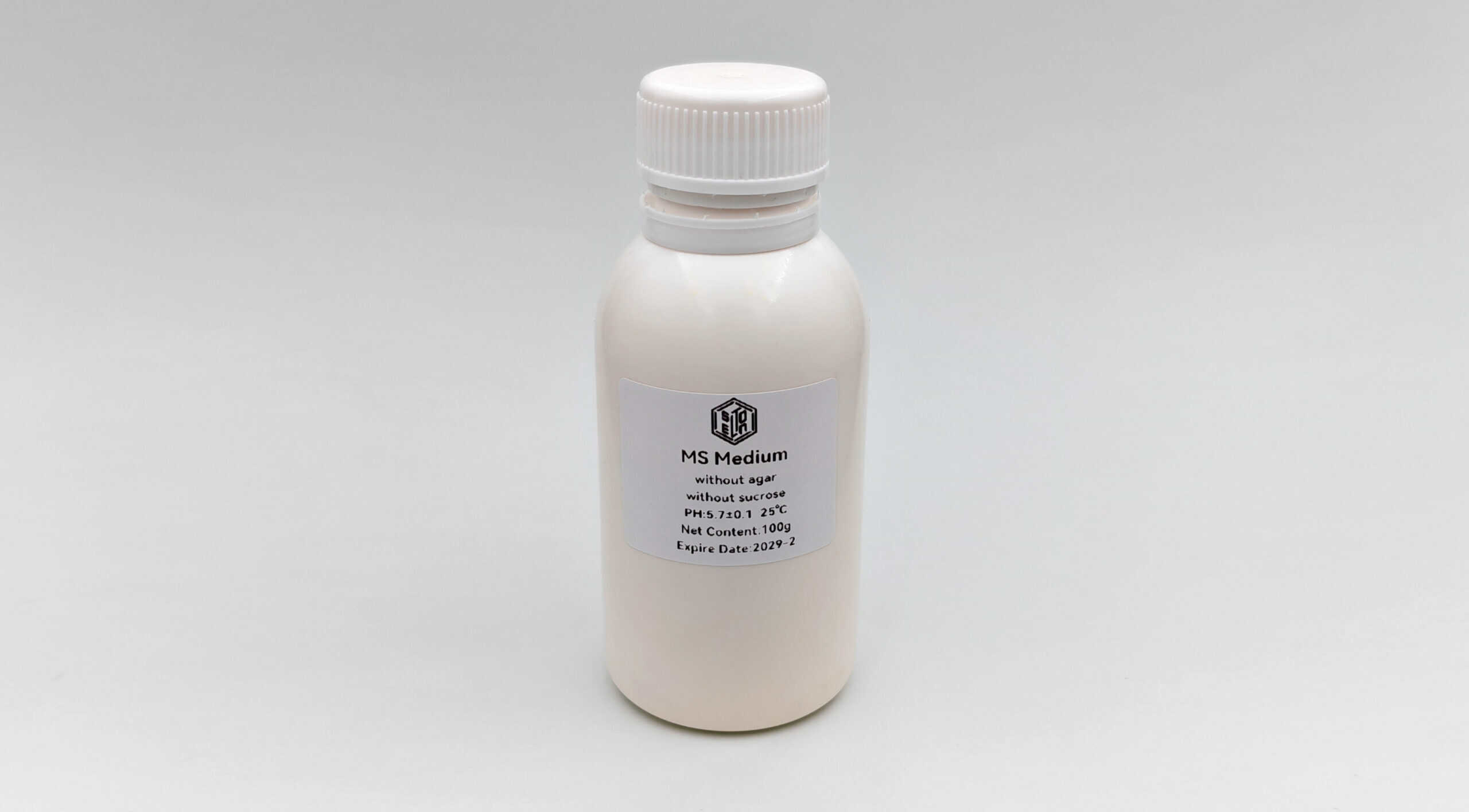
- Murashige & Skoog (MS) Medium, powder for preparing the orchid seed sowing and replating media
2.3. Culture Medium
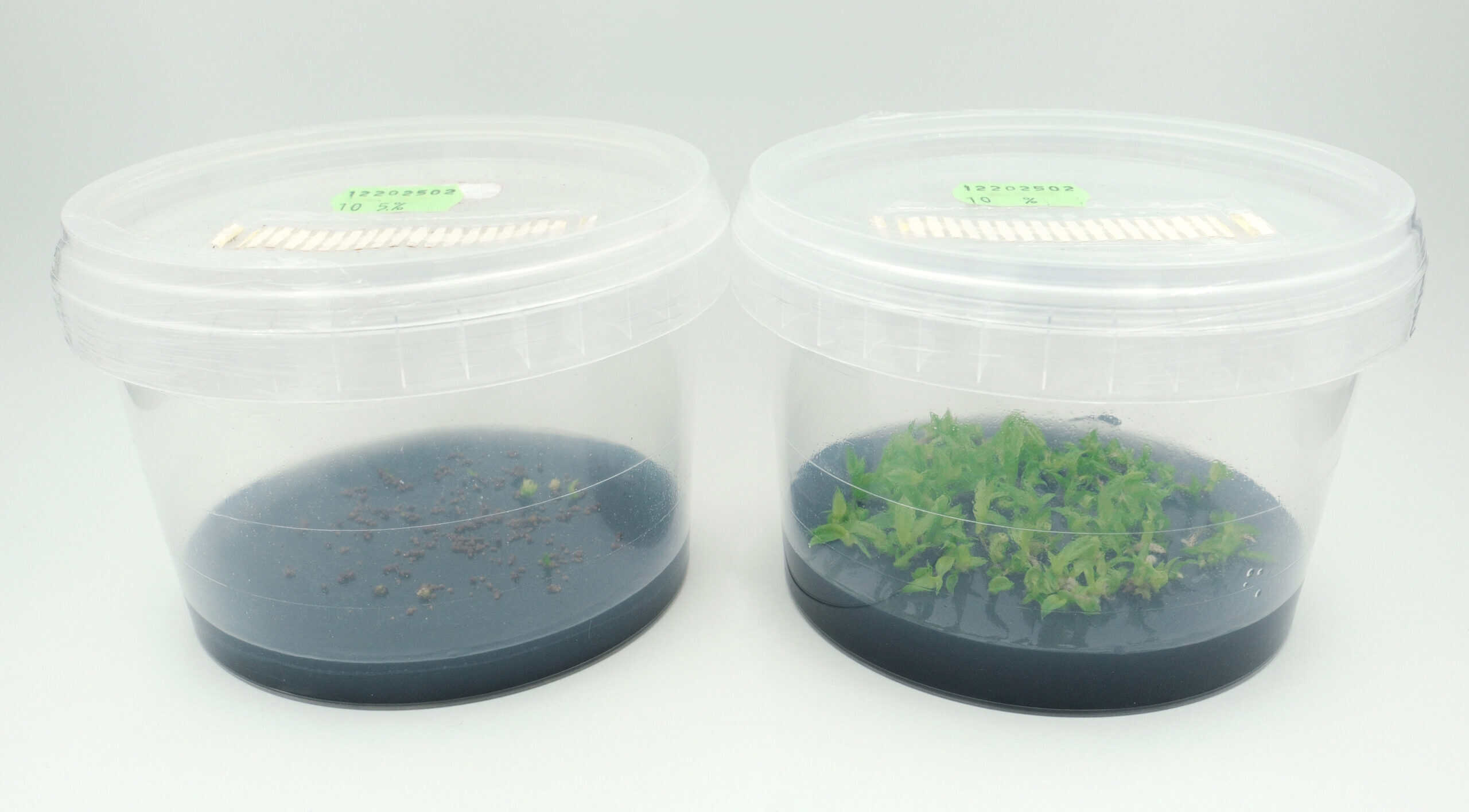
After countless experiments with various culture media and organic additives, it has become clear that coconut water is an essential component for the successful growth of Mexipedium xerophyticum. Since we began breeding Mexipedium, we have varied the coconut water concentration and have concluded that optimal growth is achieved at 10%. This concentration has proven effective for both sowing and replating. We have also conducted experiments with concentrations of up to 30% by volume of the medium. However, after an initially good germination rate, the protocorms soon die off.
In general, it is easy to get Mexipedium xerophyticum to germinate. However, further growth is difficult and can only be achieved on perfectly formulated culture media.
In addition to coconut water, we also conducted experiments with pineapple juice and homogenized banana (see photo below). We also varied the sugar concentration. It turned out that all organic additives (with the exception of coconut water) had a negative effect on the growth of the young plants, regardless of their concentration. They had no effect on germination itself though.
For Mexipedium xerophyticum, we have found the following growing medium to be effective:
| Composition of 1000 ml of sowing medium | Quantity |
|---|---|
|
Agar-Agar |
7g |
|
MS Medium (1/2 concentration) |
2.3g |
|
Coconut water |
100ml |
|
Sucrose |
12g |
|
Activated charcoal |
2g |
|
Distilled water |
900ml |
|
HCl / NaOH |
pH: 5.8 – 6.0 |
3. Preparation of the culture medium
The culture medium serves as the seedlings' sole source of nutrients. We will prepare the culture containers as follows:
- Dissolve the agar in a beaker with some of the available distilled water. It will dissolve more easily in the hot media if it has already been dissolved in cold liquid beforehand.
- Pour the other liquids into the pot and bring to a boil.
- Add MS Medium.
- Add agar-agar.
- Adjust the pH: Target: pH 5.8–6.0. (HCl lowers the pH; NaOH raises it.) Keep in mind that coconut water is naturally slightly acidic, which is why adjusting the pH is very important.
- Pour the hot medium into sterilizable containers (glass, polypropylene, or similar).
- Loosely close the lid, then sterilize it in an autoclave or pressure cooker at 121 °C for 20–25 minutes.
- After sterilizing, seal immediately and let cool.
- Seal the gap between the lid and the container with plastic wrap (e.g., cling film).
4. Preparing the seed pod
Use only ripe, undamaged seed pods. The best time is just before the pod bursts open naturally. In the case of Mexipedium xerophyticum, the pods are ripe after about 6 months. The remaining time is simply needed for them to dry out and burst open.
Whenever possible, it is preferable to sow seeds from a green pod rather than from a dry one. The procedure for sterilizing the seed pod is as follows:
- Soak the pod in a bleach solution (10% with 1 drop of dish soap) for 15 minutes, shaking it regularly.
- Rinse the capsule thoroughly with sterile, distilled water.
- Cut it open under sterile conditions and remove the seeds immediately.
Notes: Sodium hypochlorite (NaOCl) is sold in various concentrations, with household bleach typically containing 5–6%. A 10% solution of this therefore means that the final bleach solution for disinfecting orchid seeds and capsules contains approximately 0.5–0.6% NaOCl. Many laboratories use this concentration.
In the lab, Tween 20 is usually used instead of dish soap, at a concentration of 1 drop per 100 ml of bleach solution. However, dish soap at the same concentration works just as well.
5. Preparing the laminar flow hood
The greatest risk for in vitro seedings is mold and bacteria. To work under sterile conditions, you will need to use a good laminar flow hood sooner or later. This laboratory equipment was designed specifically for this purpose. For our work, we use a flow hood that is also equipped with UV light. The preparation process is as follows:
- Turn on the UV light (typically for 15–30 minutes, according to the manufacturer's instructions). Do not perform any work while it is on.
- Turn off the UV light, open the flow hood.
- Turn on the airflow.
- Let it run for 10 minutes beforehand to flush particles out of the working area.
- Wipe down the work space, side panels, and window with 70% ethanol or isopropanol. Wipe from top to bottom and from back to front. Use clean, lint-free cloths.
- Bring in the materials. Place only necessary, clean/sterile materials on the working area. The surfaces of all materials must be disinfected before they are brought in. Ethanol or isopropanol is generally used for this purpose.
- After 20 minutes, the laminar flow hood is set up and ready to be used.
Note: UV does not replace chemical disinfection; it is an additional measure.
6. Seeding process
Once the seeds and jars are sterile, you can begin sowing:
- Wipe the glass coaster with ethanol or isopropanol.
- From now on, all instruments will be heat sterilized (using a ball sterilizer or infrared sterilizer) before coming into contact with the organic material.
- Use tweezers to place the seed pod on the glass coaster, then cut it open with a scalpel.
- Open the container and set the lid aside with the inside facing up.
- Spread the seeds thinly and evenly over the surface of the agar.
- Close the lid immediately.
Important: Seeds must not be pressed into the growing medium; they should simply rest on top of it.
6.1. After sowing
Once all the seeds have been sown, the containers are sealed with plastic wrap while still inside the flow hood. Label every container if necessary, provided this has not already been done. It is very important to include not only information about the cross but also the sowing date.
The jars are placed in a warm location at 22–24 °C. The temperature should fluctuate as little as possible. In our experience, the protocorms of Mexipedium xerophyticum grow larger when germination occurs in the dark. However, the difference compared to seedlings germinated in the light is almost negligible, which is why we usually place them next to the other containers from the start.
It is particularly important to note here that in vitro seedlings are very sensitive to high temperatures. It is therefore essential that the temperature never rises above 28 °C. In the past, specialized orchid laboratories have lost their entire stock of Mexipedium xerophyticum due to excessively high temperatures!
7. Germination and Care of the Protocorms
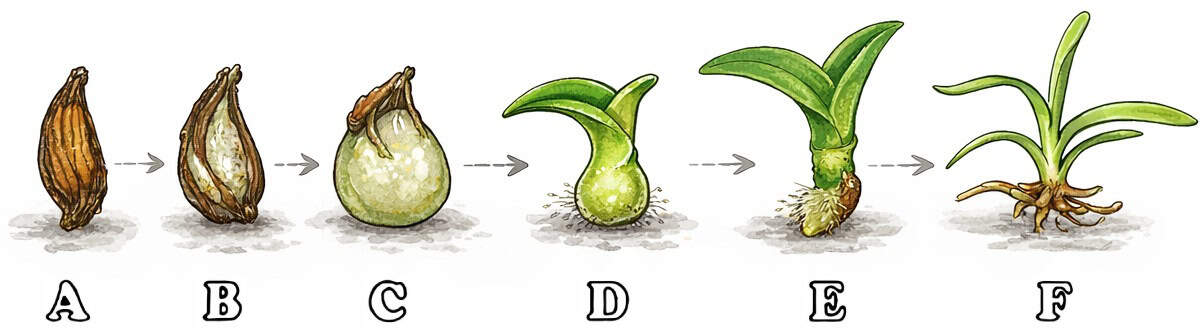
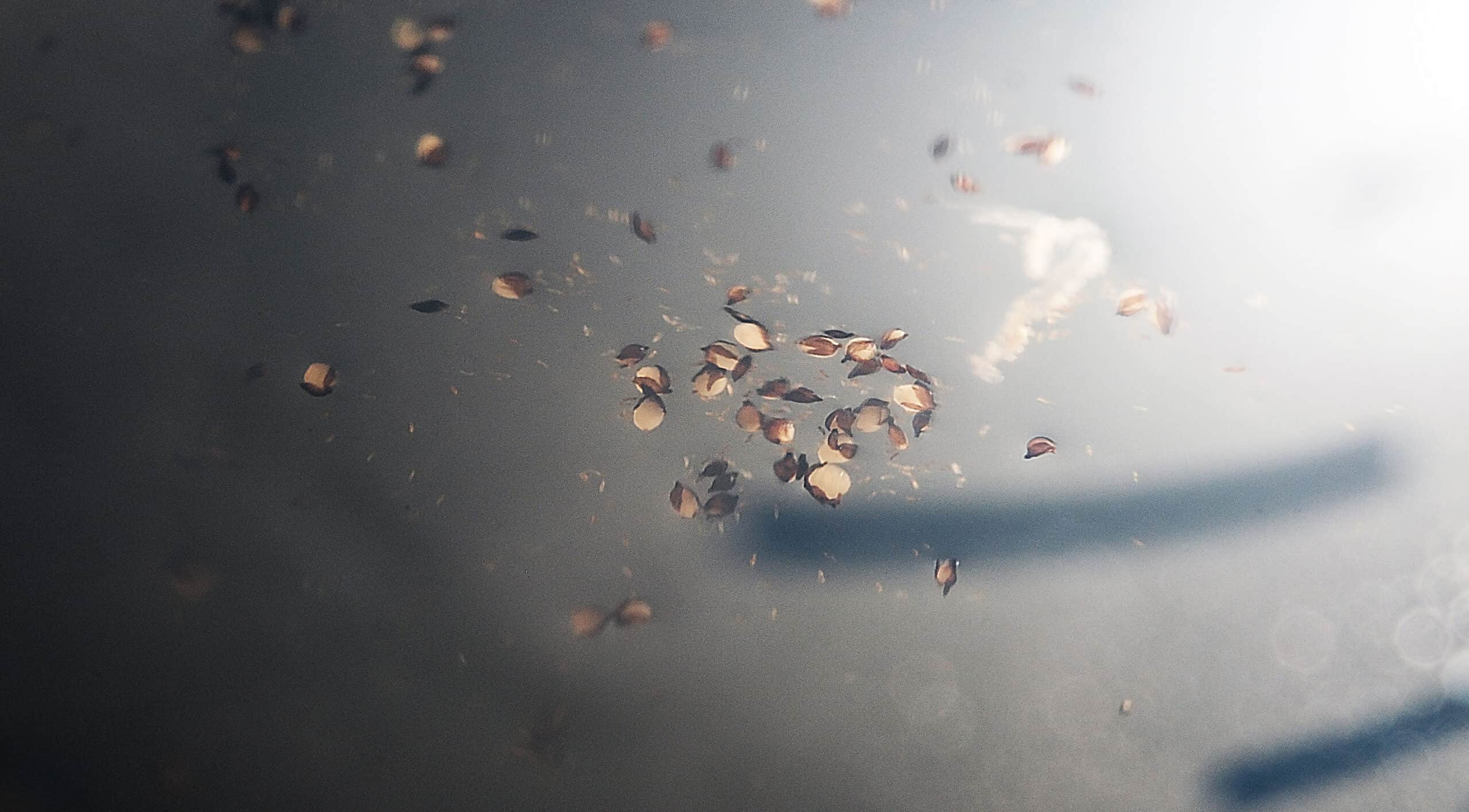
The first signs of germination can be observed after about 2 weeks.
7.1. Development Phases
- Swelling phase: The embryo absorbs moisture. (Starting on Day 1)
- Rupture of the testa: The embryo swells so much that it ruptures the testa (seed coat). (Approx. 5–10 days after sowing)
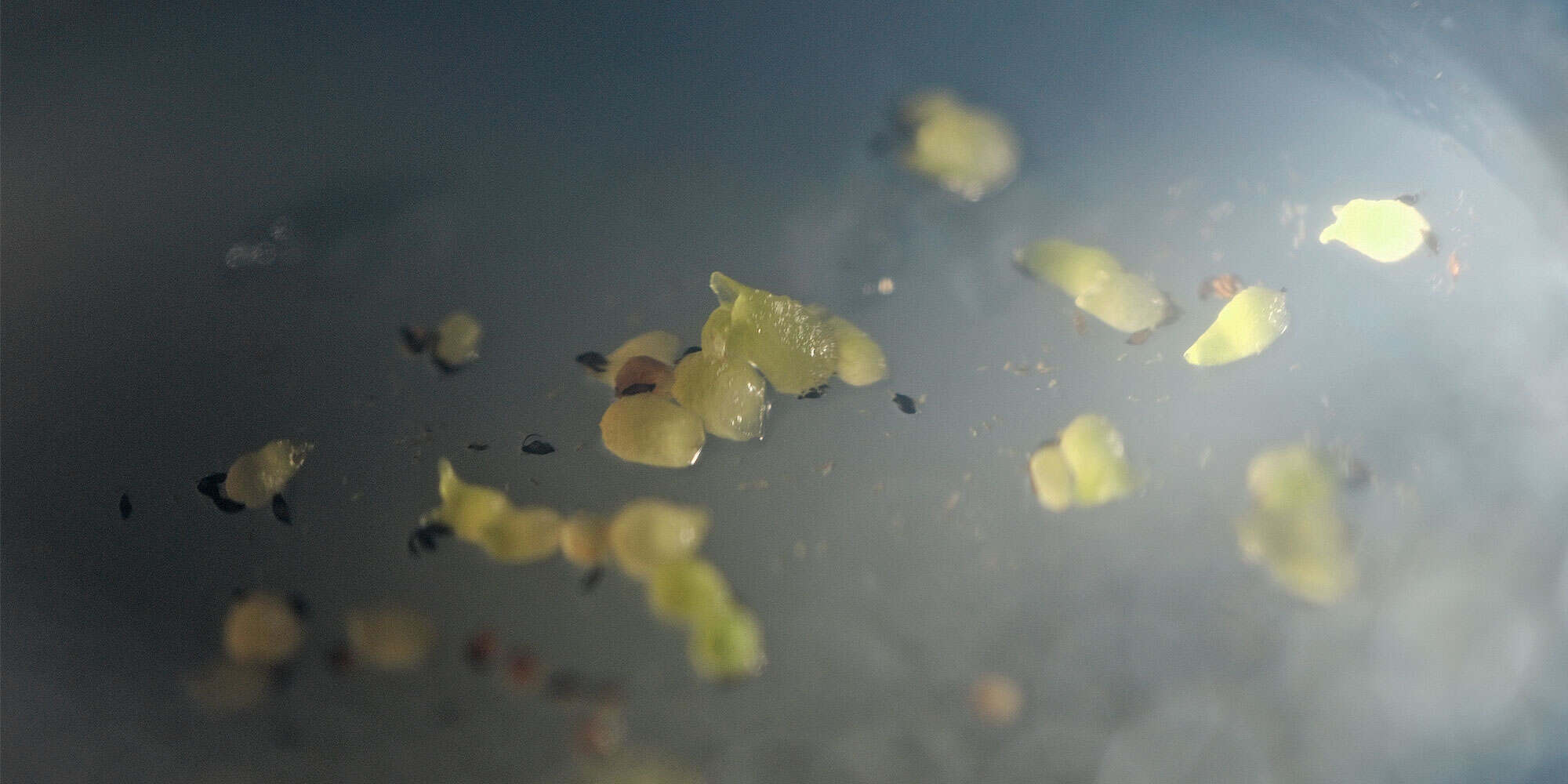
- Protocorm formation: The embryo develops into an undifferentiated ball of cells, known as the protocorm. (Approx. 10–15 days after sowing)
- Differentiation phase: The seedling develops leaf primordia and absorbs nutrients and water with the help of rhizoids (the precursors to roots). (Approx. 2 months after sowing)
- Root formation: The first root tips appear and anchor the seedling in the growing medium. (Approx. 5 months after sowing)
- Growth phase: The young plant continues to develop, and new roots and leaves are constantly forming. (Ready for transplanting after about 2 years)
7.2. Growth Conditions for Protocorms
As described above, the seedling containers can be placed in the light right from the start, because there is hardly any noticeable difference between them and seedlings that have germinated in the dark.
If you do decide to use dark germination, place the containers in the light once most of the seeds have developed into good sized protocorms. This happens after about 6 weeks. Chlorophyll production begins quickly, and the protocorms turn green within a week.
7.3. When to replate?
After about 4–5 months, the seedlings are replated for the first time. By this point, the seedlings will have already begun to form their first leaves. Replating them onto new growing medium has the advantage of allowing for greater spacing between the seedlings, which improves their access to nutrients and light.
8. Replating onto fresh medium
In our experience, when transplanting Mexipedium xerophyticum, it is best to use the same growing medium as was used for sowing. Unlike with other slipper orchid species, homogenized banana had a negative effect on the development of the young plants at all concentrations. Other organic additives, such as pineapple juice, also had no positive effect on the development of the seedlings or even caused stagnation.
| Composition of 1000 ml of replate medium | Quantity |
|---|---|
|
Agar-Agar |
7g |
|
MS Medium (1/2 concentration) |
2.3g |
|
Coconut water |
100ml |
|
Sucrose |
12g |
|
Activated charcoal |
2g |
|
Distilled water |
900ml |
|
HCl / NaOH |
pH: 5.8 – 6.0 |
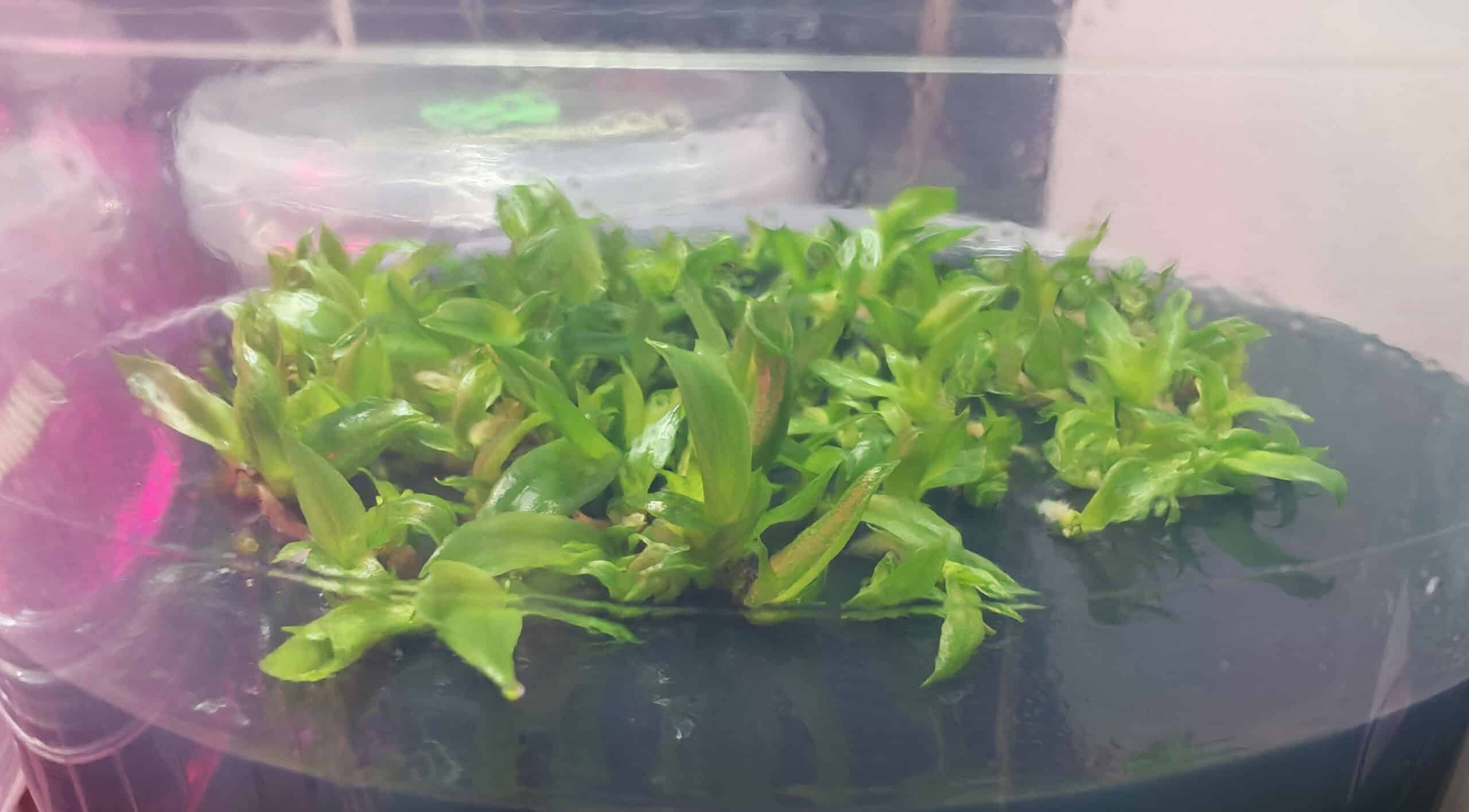
8.1. The Replating Process
- Work under sterile conditions again.
- Carefully remove the seedlings from the container using a sterile spatula or, later on, a pair of long tweezers. We use Dennerle XL Plant Tweezers for this because they have a high-quality metal finish and provide a comfortable amount of resistance when squeezing.
- Carefully place every plant in fresh growing medium, leaving enough space around it. If there are roots, try to bring them into contact with the growing medium as much as possible.
- Close the container again, seal it with plastic wrap, and continue growing them under the same conditions as before.
9. Potting the Plants
After about two years, the plants are big enough to be removed from their growing containers and planted in a community pot.
9.1. Preparing the Pots
The choice of a suitable plastic pot is a matter of personal preference. What's much more important is the potting mix:
Fine pine bark + perlite + a little Sphagnum.
Tip: A thin layer of Sphagnum should be spread over the soil surface to keep the base of the young plants moist.
9.2. Step-by-Step Procedure
- Remove the plants from the jar and thoroughly rinse off any remaining agar under running water. Take care not to damage the roots. It is always better to leave a little medium on the roots than to try to clean the plants too thoroughly.
- Put the plants in the community pot.
- Apply a thin layer of Sphagnum to the surface of the substrate after transplanting all the seedlings.
- Maintain high humidity levels during the first few weeks. Air circulation is extremely important during this time to prevent rot.
- Once the plants are sufficiently established, they can tolerate lower humidity.
10. Common Problems and Solutions
10.1. Mold in the jar
Cause: Insufficient sterility.
Solution: Discard the glass; find the cause.
10.2. Cloudy film on the surface of the medium
Cause: Bacterial growth: Insufficient sterility.
Solution: Discard the glass; find the cause.
Alternative: Given the rarity of the species, you can try to save the young plants. This actually worked quite well in our own experiments. To do this, immerse the young plants in a disinfectant solution (10% household bleach with a drop of dish soap) for at least 30 minutes, shaking them regularly. Afterward, the plants can be transferred to a new medium (without rinsing them with sterile distilled water). This treatment is not particularly gentle on the plants, and some will die in the process, but a surprisingly large proportion survives this procedure. Because the disinfectant remains on the young plants, it provides long-lasting protection against all types of germs that may still be present on the contaminated plant parts.
10.3. No Germination
Cause 1: The seeds may be dead or infertile.
Solution: Wait and see, then dispose of the glass after 1 year. The likelihood that anything will still germinate by then is virtually zero.
Cause 2: pH value is incorrect.
Solution: Determine the exact pH level before proceeding.
Cause 3: Unsuitable growing conditions.
Solution: Carefully monitor growing conditions. Temperature is particularly important (minimum-maximum thermometer).
10.4. Stagnation
Cause 1: Medium used up.
Solution: Replating necessary.
Cause 2: Inappropriate growing conditions.
Solution: Closely monitor growing conditions. Excessively high temperatures are particularly critical for Mexipedium xerophyticum. These should never exceed 28 °C if possible, not even for a short time!
10.5. Fading of the protocorms
Cause 1: Incorrect growing medium.
Solution: Use the growing medium described above. Mexipedium xerophyticum is very particular about its growing medium and, above all, its organic additives. While getting the seeds to germinate is usually very easy, getting them to grow afterward is a challenge.
Cause 2: Incorrect temperature.
Solution: The seedlings in the jar are relatively sensitive to high temperatures. Temperature spikes above 30 °C cause Mexipedium xerophyticum to die off, starting with individual protocorms and potentially leading to total loss.